


Things to Know Before You Make Your First Short Film
Making your first short film? Here's what experienced filmmakers wish they'd known before they started — scope, sound, budget and what comes next.
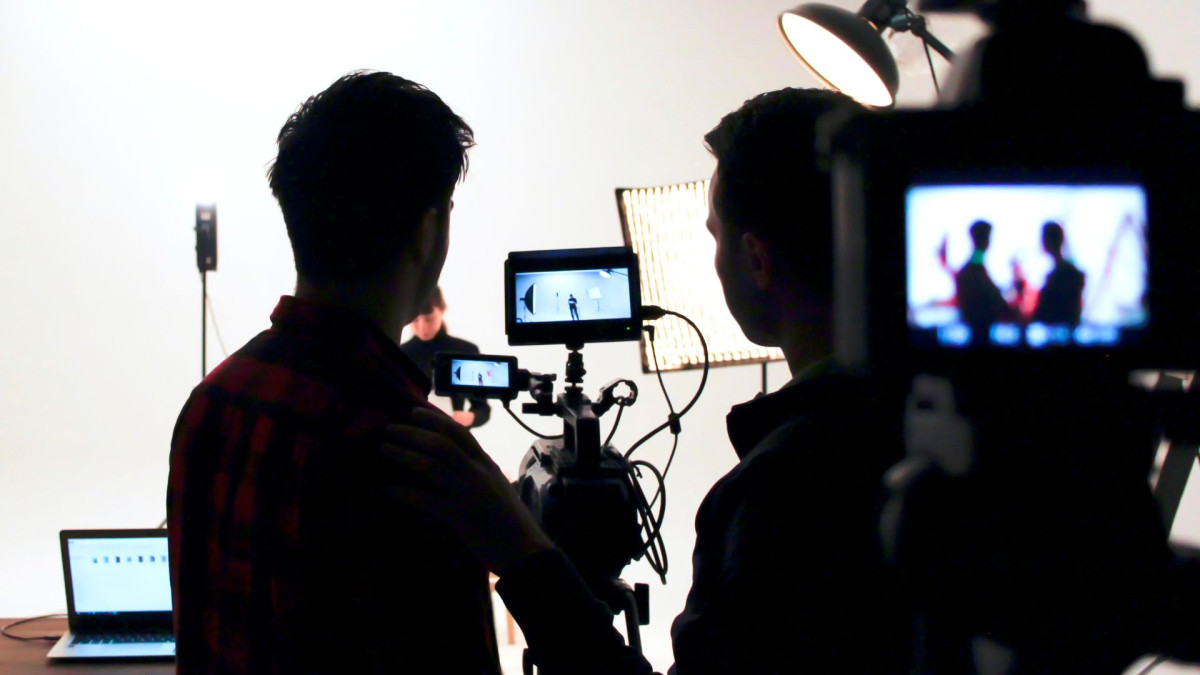
Somewhere on your hard drive there is a note, a voice memo, or a half-finished script for a short film you have not made yet. Most people never make it. Not because they lack talent, but because nobody told them what the first one is actually like.
This is not another twelve-step checklist. Those exist, they are fine, and you can find one in ten seconds. This is the other thing — the stuff filmmakers learn the hard way on their first short and wish somebody had said out loud beforehand. Read it, then go make the film anyway.
Your first short film is a learning project. Treat it like one.
Here is the reframe that saves people months of paralysis: the goal of your first short is not to make something brilliant. The goal is to finish something and learn from every stage of it.
Every filmmaker you admire has an early short they wince at. That film was not a failure — it was the tuition fee. It taught them how long a shoot day really takes, what a bad sound recording sounds like in the edit, and how much of directing is just clear communication.
If you aim for a masterpiece, you will either never start or you will run out of money and morale halfway. If you aim for finished and learned, you will end up with a completed film, a reel, a crew of collaborators, and the confidence to make a better one. That second film is where things get interesting.
Keep the scope brutally small
This is the single most useful constraint in independent filmmaking, and almost every first-timer ignores it.
One location. One or two characters. Five to ten minutes. That is the shape of a first short film that actually gets finished.
Every location you add multiplies your problems: travel time, permissions, continuity, new lighting conditions, new sound environment. Exteriors are worse. Outside, you control nothing — not the weather, not the light as it shifts across the afternoon, not the motorbike that drives past during your best take. Public spaces frequently need permits and sometimes police clearance.
Filmmakers with three shorts behind them plan ambitious exteriors. Filmmakers with zero shorts behind them shoot a two-hander in a kitchen and make it excellent. You can make your sprawling multi-location epic later, with a crew who trusts you because they saw you finish the kitchen film.
How long should your first short film be?
Aim for five to ten minutes. Technically a short film is anything up to about 40 minutes, and the festival average sits closer to fifteen or twenty, but for a debut, shorter is strictly better. A tight seven-minute film that works will travel further than a twenty-minute film that sags in the middle. Shorter also means fewer shoot days, less money, and a far higher chance you finish.
The script is the cheapest thing to get right and the most expensive to get wrong
Nothing you fix on set costs less than fixing it on the page. Rewriting a scene is free. Reshooting it is not.
Start with a logline — one or two sentences that capture the whole film. If you cannot write the logline, the idea is not clear enough yet, and no amount of beautiful cinematography will hide that.
Then remember the rule that improves almost every short script: enter late, leave early. Start each scene as deep into the action as you can and cut out the moment your character has what they came for. Shorts have no room for warm-up. Cut the greetings, cut the goodbyes, cut the walking to the door.
And go easy on dialogue. Film is a visual medium, and a first-time writer's instinct is to explain everything in words. Trust the image. If you can show it, do not say it. Planning those images in advance is exactly what a storyboard is for — it is worth reading our guide to the storyboard as an essential tool for short filmmaking before you shoot a frame.
Audio will make or break your film — more than your camera
If you take one technical lesson from this article, take this one.
Audiences will forgive a soft image, a slightly noisy shot, or an imperfect colour grade. They will not forgive bad sound. Muddy, echoing, wind-battered dialogue makes a film feel amateur within about four seconds, and no edit can rescue it.
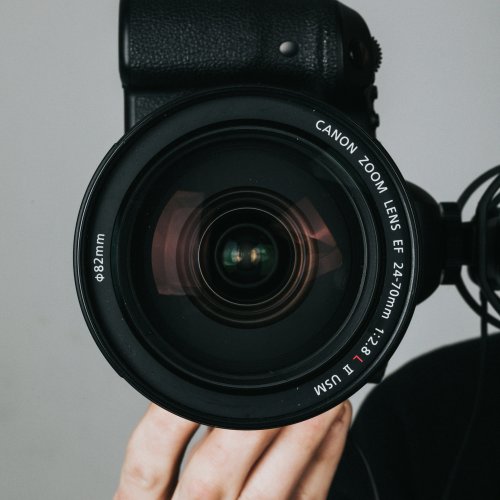
Your camera's built-in microphone is not good enough. It was designed to capture everything in the room equally, which is the opposite of what you want. A basic external microphone — a small shotgun mic on the camera or a lavalier clipped to your actor — is the biggest quality jump per euro in all of filmmaking.
So when your budget forces a choice between a better camera and decent audio gear, buy the audio gear. Every time. We go deeper on this in our piece on the importance of sound design in short-form video content.
What do you actually need to make a short film?
Less than you think. The honest minimum is four things:
- A camera — an entry-level mirrorless body, a used DSLR, or a modern smartphone.
- A microphone that is not the one built into your camera.
- One light and something white to bounce it off.
- Editing software — DaVinci Resolve is free and genuinely professional.
That is it. Everything else is a nice-to-have. We break down a complete kit, priced and prioritised, in the best filmmaking gear under $1,000 for a no-budget short film.
Can you make a short film on your phone?
Yes, and it is not a compromise position. A recent smartphone paired with a proper microphone and one decent light will outperform a cheap camera kit with bad sound and no lighting. Films shot on phones have played at real festivals. The phone is not what holds a first film back — planning, sound and light are.
It will cost more than you think, and money has more than one source
Ask any filmmaker about their first budget and you will hear the same sentence: it cost more than we planned. Batteries die and need replacing. A location falls through. You need to feed eight people for two days, twice, because you lost a day to rain.
Build a buffer of at least twenty percent into whatever number you land on, and read our guide to budgeting a short film — the do's and don'ts before you commit to anything.
The good news is that you do not have to fund it alone from savings. Short films are supported by real grants, and many of them are aimed specifically at people with no track record. Depending on where you are based, start with our guides to short film grants and funding in the US, short film funding in the UK, or short film funding in Europe. Crowdfunding is the other well-trodden route — we publish crowdfunding campaigns from indie filmmakers regularly, and there is a lot to learn from how they are run.
How much does a short film cost?
Anywhere from almost nothing to tens of thousands. A disciplined single-location short made with friends and borrowed gear can genuinely be made for the cost of food and transport. Add professional actors, a paid crew, insurance and equipment rental, and you are quickly into the thousands. Decide which film you are making before you write the budget, not after.
Crew up — even a tiny one — and communicate like a professional
Filmmaking is collaborative, and doing everything yourself is a recipe for a film where every department is slightly compromised. For a first short, friends and film students are a perfectly good crew. What matters is not their CV; it is that everybody knows what is happening.
The roles worth filling first are cinematographer, sound recordist and first assistant director. If you can only fill one, fill sound — see above.
Then communicate properly. One group chat, not four. A call sheet telling everyone where to be and when. A shot list so you are not designing the film while twelve people wait. Being organised is not bureaucracy; it is what buys you the creative time on set. Filmmaker Kris Williams walks through exactly this process in our interview on how to make your short film happen, step by step, and line producer Max Neace makes a strong case for treating your short film like you would a feature.
Plan the ending before you shoot the beginning
Most first-time filmmakers think the finish line is picture lock. It is not. A film nobody sees is a film that only taught you half its lessons.
Decide early whether you want a festival run. This matters more than people realise, because many festivals will not accept a film that is already public online. If you upload to YouTube the week you finish, you may have quietly disqualified yourself from the festivals you were dreaming about. Send your family a private link instead and be patient.
If you do want the festival route, our ultimate guide to submitting to film festivals covers the practicalities, and you will want a proper press kit ready. For the bigger picture of what happens after the edit, read our short film distribution strategy guide and navigating distribution for independent short films.
Start before you feel ready
Nobody feels ready for their first short film. The people who make one are not more prepared than you — they simply decided that a small, imperfect, finished film beats a perfect imaginary one.
Keep it small. Protect your sound. Build a buffer. Finish it. Then do it again, better.
Indie-Clips is made for filmmakers, by filmmakers. Create your free account to save guides like this one and join a community of independent filmmakers from around the world, explore more articles for your next step, and subscribe to our newsletter so the next guide lands straight in your inbox. When your film is finished, submit your short — we would love to watch it.
Frequently Asked Questions
What's Your Reaction?
 Like
0
Like
0
 Dislike
0
Dislike
0
 Love
0
Love
0
 Funny
0
Funny
0
 Wow
0
Wow
0
 Sad
0
Sad
0
 Angry
0
Angry
0

Co-founder of Indie-Clips.com

















Reviews & Comments (0)