


Filmmaking Schools in Belgium: The Complete Guide for 2026–2027
Belgium has a rich cinematic culture and a strong tradition of filmmaking, documentary production, animation and experimental cinema. For aspiring filmmakers, it is also an interesting place to study, with several renowned film schools and audiovisual arts programmes offering practical and academic training. Whether you want to become a film director, cinematographer, screenwriter, film editor, sound designer or animation filmmaker, Belgium offers a range of educational opportunities. From established institutions in Brussels to art schools in Ghent and Louvain-la-Neuve, students can choose between different approaches to film education. One of Belgium's advantages is its multilingual environment. Film education is available in French and Dutch, while a growing number of programmes and international master's degrees are taught in English. In this guide, we explore some of the main filmmaking schools and audiovisual arts programmes in Belgium, explain what they offer and highli
1. INSAS – Institut National Supérieur des Arts du Spectacle
Location: Brussels
Language: Mainly French
Website: https://insas.be/
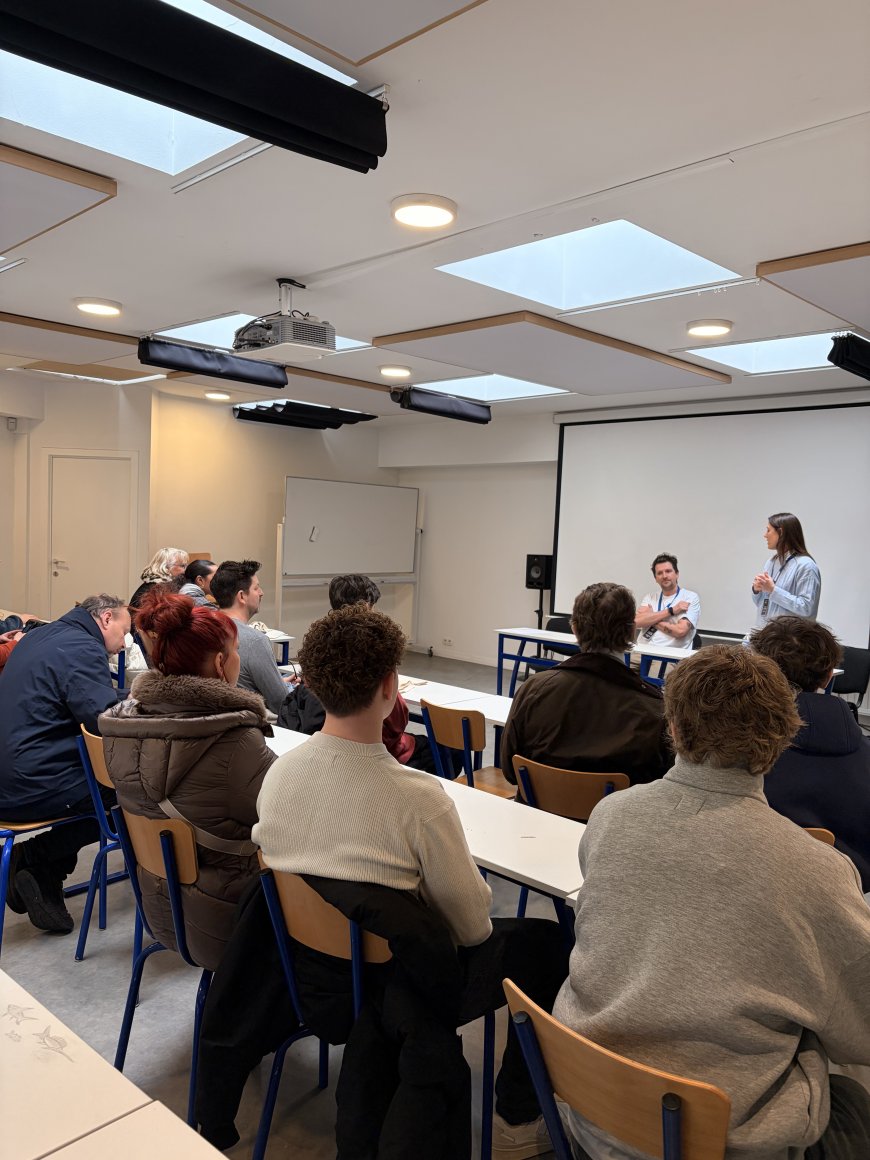
INSAS is one of Belgium's best-known higher education institutions for film, theatre and audiovisual arts. Founded in 1962, the school has built a strong reputation for training professionals in the performing arts and film industries.
Its audiovisual department offers specialised education in several areas of filmmaking, including directing, cinematography, editing, sound and production-related disciplines.
Rather than focusing exclusively on technical skills, INSAS encourages students to develop their artistic vision, critical thinking and understanding of cinematic language. Practical projects and collaborative work are central to the educational experience.
Admission is selective and involves entrance examinations. Depending on the specialisation, applicants may be asked to demonstrate their artistic interests, technical abilities and understanding of cinema.
INSAS is particularly interesting for students who want an intensive, artistically demanding education in a specialised film-school environment.
2. IAD – Institut des Arts de Diffusion
Location: Louvain-la-Neuve
Language: French
Website: https://www.iad-arts.be/
IAD is another major Belgian institution for film and audiovisual education. Located in Louvain-la-Neuve, it offers training in cinema, television, radio, theatre and multimedia.
Its audiovisual programmes cover a broad range of filmmaking disciplines, including:
-
Film directing and realisation
-
Cinematography and image
-
Sound recording and sound production
-
Editing and script supervision
-
Screenwriting and multimedia creation
The school places considerable emphasis on practical experience. Students work on projects and collaborate with people from different specialisations, allowing them to understand the various stages involved in making an audiovisual production.
IAD offers bachelor-level training and further study opportunities. Admission to its first-year programmes includes artistic entrance examinations, which assess motivation, artistic sensitivity, general knowledge and personal creative work.
For students looking for a French-speaking film school with a broad audiovisual curriculum, IAD is an excellent institution to investigate.
3. ESRA Brussels – École Supérieure de Réalisation Audiovisuelle
Location: Brussels
Language: Check the current programme
Website: https://www.esra.edu/
ESRA is a private institution specialising in audiovisual and film education, with a network of campuses in several countries.
Its educational approach traditionally focuses on practical filmmaking, audiovisual production and the technical skills needed to work in the industry.
Students interested in directing, cinematography, editing, sound and audiovisual production may wish to investigate its Brussels offering.
However, prospective students should verify the current availability of Brussels-based programmes, their teaching language, tuition fees and the status of the qualification awarded.
As private film education can differ considerably from publicly funded higher education in Belgium, it is particularly important to check whether a programme leads to a recognised higher education qualification.
4. LUCA School of Arts – Sint-Lukas Brussels
Location: Brussels
Language: Dutch and English, depending on the programme
Website: https://www.luca-arts.be/en
LUCA School of Arts is one of the most important institutions for visual and audiovisual arts education in Flanders.
Its Sint-Lukas campus in Brussels is particularly relevant to aspiring filmmakers, offering programmes in film, animation and other visual arts disciplines.
The school's approach combines artistic experimentation, visual storytelling and technical development. Students are encouraged to explore their own creative language and develop independent projects.
Its film-related education includes opportunities to work on fiction, documentary and experimental audiovisual productions.
LUCA is also an interesting option for international students. Its programme catalogue includes English-taught postgraduate opportunities, including a master's programme in filmmaking in Brussels.
The school also participates in the Joint International Bachelor in Film – Pathfinder, an English-language international programme that combines in-person and hybrid learning.
Students should carefully distinguish between the different LUCA campuses and programmes, as their specialisations and language requirements vary.
5. LUCA School of Arts – Narafi
Location: Brussels (Forest)
Language: Primarily Dutch; programme-specific arrangements may vary
Website: https://www.luca-arts.be/
Narafi is another LUCA campus with a long-standing connection to practical audiovisual production.
Its Film, TV and Video programme is particularly interesting for students who want to acquire a broad professional understanding of audiovisual production.
The curriculum covers different aspects of filmmaking and television production, including:
-
Camera operation and cinematography
-
Lighting
-
Directing
-
Sound recording
-
Video and film editing
-
Screenwriting
-
Production
Compared with more academically oriented film programmes, Narafi has a strong practical and professional focus.
It is worth considering for students interested in working in film production, television, advertising, corporate video or other audiovisual sectors.
As with other LUCA programmes, prospective students should check the current campus-specific course information and language requirements.
6. KASK & Conservatorium – School of Arts Ghent
Location: Ghent
Language: Dutch for bachelor's studies; English-language master's opportunities
Website: https://schoolofartsgent.be/en/
KASK & Conservatorium, part of HOGENT and Howest's School of Arts structure, offers a distinctive approach to film education.
Its film programme is particularly interesting for students who want to explore cinema as an artistic medium rather than simply learn the technical aspects of filmmaking.
The programme encourages students to experiment with different forms of moving images, storytelling and audiovisual expression.
Students can explore fiction, documentary, experimental cinema and other forms of visual storytelling.
The school places considerable importance on artistic research, individual development and the relationship between cinema and contemporary art.
KASK is an especially interesting option for aspiring filmmakers who want to develop a personal cinematic voice and are open to unconventional approaches to film production.
The school also has an animation film programme for students interested in animated storytelling.
7. La Cambre – École nationale supérieure des arts visuels
Location: Brussels
Language: French
Website: https://www.lacambre.be/
La Cambre is one of Belgium's leading visual arts schools. Although it is not a conventional film school, it deserves consideration by students interested in animation and experimental moving images.
Its animation-related education combines drawing, visual storytelling, artistic research and the technical possibilities of animated cinema.
Students interested in animation can explore different approaches to the medium, including traditional techniques, contemporary visual experimentation and personal forms of storytelling.
La Cambre is particularly suitable for people who see filmmaking as an extension of visual art and want to develop a distinctive artistic identity.
It is not necessarily the best choice for students looking for a conventional live-action filmmaking curriculum, but it is an important institution to consider for animation and experimental cinema.
8. RITCS – Royal Institute for Theatre, Cinema and Sound
Location: Brussels
Language: Primarily Dutch
Website: https://www.ritcs.be/en
RITCS, part of Erasmus University College Brussels (Erasmushogeschool Brussel), is an established school for film, theatre and sound education.
Its audiovisual arts department offers specialised pathways in:
-
Film directing
-
Screenwriting
-
Film production
-
Cinematography
-
Editing
-
Sound design
-
Animation
-
Radio
One of the school's strengths is its emphasis on artistic development alongside professional and technical training. Students have opportunities to work on productions and collaborate across different departments.
RITCS is particularly relevant for students who want to develop a career in the Belgian or wider European audiovisual industry.
The main language of instruction is Dutch, although international exchange students may have access to English-language support and adapted study arrangements. Applicants should check the language requirements for their chosen programme before applying.
9. INRACI – Institut National de Radioélectricité et de Cinématographie
Location: Brussels
Language: French
Website: https://www.inraci.be/
INRACI has a long history of technical and artistic education in audiovisual fields.
It is worth mentioning for students interested in practical training in areas such as photography, video, audiovisual production and computer graphics.
However, it is important to distinguish INRACI from the higher education institutions listed above. Its current educational offering is associated with secondary-level technical and artistic education rather than the same type of bachelor's and master's degrees offered by INSAS, IAD or LUCA.
It may therefore be more appropriate for younger students looking for an earlier entry into audiovisual and technical education.
Prospective students should consult the school's current programme catalogue and admission information.
10. Other international filmmaking opportunities in Belgium
Belgium also participates in international collaborations that offer opportunities for students interested in documentary filmmaking and other specialised areas of cinema.
For example, DocNomadsPlus is an international Erasmus Mundus joint master's programme in documentary filmmaking. It involves partner institutions in different European countries, including LUCA School of Arts in Belgium.
The programme is particularly relevant to students interested in documentary cinema, international collaboration and developing a personal approach to non-fiction filmmaking.
Another programme worth investigating is FilmMemory, an international joint master's programme focusing on audiovisual heritage, including film preservation, restoration and the circulation of moving images.
These programmes are not conventional Belgian film-school degrees, but they demonstrate the international opportunities available to students who want to study film in a European context.
Which filmmaking school in Belgium should you choose?
The best film school depends on the type of filmmaker you want to become and the educational environment in which you would like to develop.
Here is a simplified comparison of the institutions covered in this guide:
| School | Location | Main focus |
|---|---|---|
| INSAS | Brussels | Film and audiovisual arts |
| IAD | Louvain-la-Neuve | Cinema and audiovisual production |
| RITCS | Brussels | Film, sound and audiovisual arts |
| LUCA – Sint-Lukas | Brussels | Film and animation |
| LUCA – Narafi | Brussels | Practical film, TV and video |
| KASK | Ghent | Artistic and experimental filmmaking |
| La Cambre | Brussels | Animation and visual arts |
| ESRA Brussels | Brussels | Private audiovisual training |
| INRACI | Brussels | Technical and artistic secondary education |
This is not a ranking. Each institution has its own philosophy, specialisations and admission criteria.
Students interested in directing or cinematography may prefer a school with a strong live-action production curriculum. Those interested in animation may find La Cambre, LUCA or KASK more relevant. Students interested in experimental and documentary cinema may appreciate the artistic approaches offered by KASK and other art-school programmes.
Studying filmmaking in Belgium: What should international students know?
Belgium is an attractive destination for international students, but there are several practical considerations to take into account before applying.
Language of instruction
Belgium has three official languages: Dutch, French and German. Most of the film schools covered in this guide teach primarily in French or Dutch.
However, some institutions offer English-language master's programmes, international joint degrees and exchange opportunities.
LUCA School of Arts is particularly worth investigating for English-speaking students, thanks to its international programmes in film and animation.
Do not assume that an entire school operates in English simply because it offers one English-language programme. Always check the language of the specific course.
Admission requirements
Admission procedures differ from one institution to another.
Some film schools organise competitive artistic entrance examinations, while others require applicants to submit a portfolio or attend an interview.
Depending on the programme, applicants may need to provide:
-
A secondary school diploma or equivalent qualification
-
A portfolio of creative work
-
A personal statement or motivation letter
-
Evidence of language proficiency
-
Academic transcripts
-
Participation in artistic or technical entrance examinations
Schools such as INSAS and IAD have selective admission procedures. It is therefore advisable to prepare well in advance.
Tuition fees and financial considerations
Tuition fees vary depending on the institution, the programme, the student's nationality and residency status, and the type of qualification.
Publicly funded higher education institutions generally have different fee structures from private schools and international joint master's programmes.
International students should also consider accommodation, transport, equipment, materials and other living expenses.
For accurate information, consult the official tuition and admissions pages of each institution rather than relying on older figures published online.
Opportunities after graduation
Belgium has a well-established audiovisual sector, with opportunities in film production, television, documentary filmmaking, animation, advertising and digital media.
Brussels is an important location for production companies, broadcasters, cultural organisations and international institutions.
Ghent, Antwerp and other Belgian cities also have active creative communities and audiovisual production networks.
Studying in Belgium can therefore provide students with opportunities to develop professional contacts, collaborate on productions and gain experience in a multilingual European environment.
Final thoughts: Is Belgium a good place to study filmmaking?
Belgium offers a diverse range of opportunities for aspiring filmmakers.
From the established film-school traditions of INSAS and IAD to the artistic approaches of KASK and La Cambre, students can choose between very different educational environments.
LUCA School of Arts and RITCS also provide interesting options for those looking to combine creative development with professional audiovisual training.
For international students, Belgium is particularly interesting because of its multilingual environment and its growing range of international and English-language programmes.
Ultimately, choosing the right film school is about more than reputation. It is about finding an institution whose teaching philosophy, specialisations and practical opportunities match your ambitions as a filmmaker.
Before applying, take the time to explore student films, visit the campuses if possible, review the admission requirements and compare the programmes carefully.
The right environment can make a significant difference in helping you develop your creative voice and take your first steps into the world of cinema.
Frequently Asked Questions
What's Your Reaction?
 Like
0
 Dislike
0
 Love
0
 Funny
0
 Wow
0
 Sad
0
 Angry
0

Ambre Vanneste is the founder and creative director of Indie-Clips, a Belgian non-profit organisation and website that highlights the work of independent filmmakers. Ambre is the screenwriter and director of the short films "The Perfect Boyfriend List" and "Un Peu d'Audace", having received several nominations in European Festivals.




















Reviews & Comments (0)